Catching the fleeting scenes of many splendored life
'Look closely. The beautiful may be small' — Kant

24 July 2011

Sea Daffodils (Pancratium maritimum)
Summer Colours: White

"The flower is the poetry of reproduction. It is an example of the eternal seductiveness of life" (Jean Giraudoux The Enchanted)

The dunes are at their most beautiful when Sea Daffodils, aka Sand Daffodil, Sand
Lily and the Lily of St. Nicholas, start to bloom. This gentle and graceful bulbous plant, as I already mentioned before, is native to Mediterranean dunes and southwestern Europe. In hot summers its twisted leaves die back and sweet-scented flowers pop up right from the sand. Except for still, windless summer nights, you have to squat and bring your nose close to the flower to perceive its exotic and delicate fragrance. One of its traits is that it recognises and doesn't accept its own pollen —  it can only be cross-pollinated, nor can it be pollinated artificially. Finicky beauty.

Sea daffodil Pancratium maritimum flower close-up
(© 2011 LightColourShade. All rights reserved)

7 July 2011

The Dunes in Late Spring.

There aren't many places left in the world where natural coastal dunes hasn't been gobbled up by ugly hotel skyscrapers, oil refineries and the like, especially in Europe. Fortunately, you can still come across the patches of almost virgin coastal dunes to chill out.

Sea daffodils on the Mediterranean dunes
Sea daffodils (Pancratium maritimum) on the Mediterranean dunes.
(by-nc-nd)

25 June 2011

Wildflowers and Weeds

Until man duplicates a blade of grass, nature can laugh at his so-called scientific knowledge....
T.Edison

I can’t help it. Every time I set my eyes on a lovely flower or plant — and I find almost all of them interesting — I have to shoot my camera (if I’m carrying it with me) and share their beauty and my excitement with everyone.

Grass spike
Grass spike with a few effects.
(© 2011 LightColourShade. All rights reserved)

7 June 2011

Wildflowers of the Dunes.
Treasure Flowers and Cape Daises.

Take a walk through the flowering dunes and in addition to the refreshing sea breeze you'll find a lot of wildflowers to feast your eyes on. Treasure flowers (Gazania rigens) are my favourites — I find their warm colours especially pleasing.

Gazania rigens, var leucolaena flowers
Gazania rigens, var leucolaena flowers.
(© 2011 LightColourShade. All rights reserved)

31 May 2011

Moth plant.

There’s something very romantic about the way a parachute or propeller seeds drift on currents of air or blow in the wind as if they’ve taken on a life of their own.
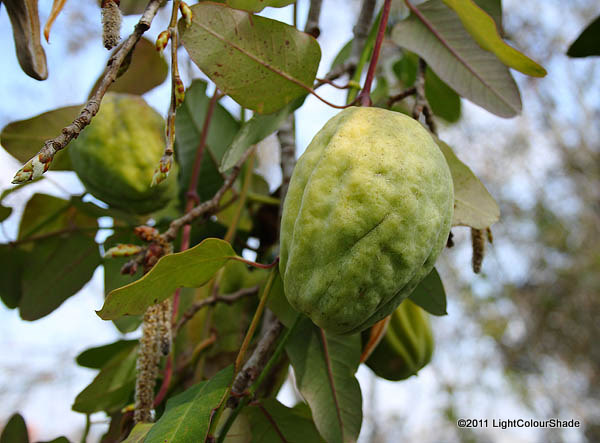
On the outside, moth plant fruit looks plain and unremarkable, but it has a surprise inside.

Moth plant (Araujia cericifera)
Moth plant (Araujia cericifera) green fruit.
(© 2011 LightColourShade. All rights reserved)

21 May 2011

Spring colours. Red, lilac, pink, white, yellow, blue, violet and their hues.

In Spring, wherever you turn your head you find something blooming, flowering or singing. Every year I discover something new in apparently familiar environment — that's the beauty of observing the Nature. Red is my favourite colour — to my eye, without something red the scene lacks verve, impetus, energy, passion. Even a drop of red makes everything look more vivid.

Red geranium flower (Pelargonium hortorum)
Red geranium flower (Pelargonium hortorum).
(© 2011 LightColourShade. All rights reserved)

5 May 2011

Life in Inanimate Things. Gemstones.

Minerals are widely used in alternative therapies since they're believed to have some kind of inner energy. Boffins will argue there's no scientific evidence for it, but I go by the rule that

'There are more things in heaven and earth, Horatio,
Than are dreamt of in your philosophy.'

(Hamlet Act 1, scene 5, 159–167)


As I see it, anything that took Nature millions of years to create has to be special.

Green calcite mineral top view
Green calcite mineral top view. (by-nc-nd)
Related Posts Plugin for WordPress, Blogger...