Catching the fleeting scenes of many splendored life
'Look closely. The beautiful may be small' — Kant

Showing posts with label Winter. Show all posts

11 February 2013

Mediterranean Gulls (Ichthyaetus melanocephalus)

The Mediterranean Gull, Ichthyaetus melanocephalus, is a small gull that breeds almost entirely in the Western Palaearctic.
This gull breeds in colonies in large reed beds or marshes, or on islands in lakes. Like most gulls, it is highly gregarious in winter, that's when a sizeable flock visits our pond and hangs around until spring. It is not a pelagic species, and is rarely seen at sea far from coasts.
The Mediterranean Gull's an opportunistic omnivore, feeding on fish, worms, scraps, insects, offal and even carrion.

Mediterranean Gull (Ichthyaetus melanocephalus) on the water
(© LightColourShade. All rights reserved)

5 February 2013

Night Scenes. Flowering Mimosa in the Street Lamp Light

Mimosas or Silver wattle, (Acacia dealbata), are in full flower now, spreading around sweet fragrance and delighting the eye. This particular tree seemed to be embracing the streetlight, and the scene gave me the warm feeling of cosiness despite it being rather cold.

Mimosa, Silver wattle (Acacia dealbata) flowers in the street lamp light
(© LightColourShade. All rights reserved)

4 January 2013

Night Guest. Common Nightingale (Luscinia megarhynchos)

A couple of weeks ago a small brown bird with a reddish tail started coming every evening at exactly the same time to perch between the rolled up parasol and the ceiling and stay overnight unless it’s windy or rainy. I identified it as a common nightingale.
I usually put a plate with grains and some water for collared doves and any other feathered friend, so I saw this cutie leap across the terrace during the day, trying to snatch some leftovers between the dove raids. My guess is that we owe the honour of the bird’s visits not to the fact that it (I don’t like using “it” for animals, but in this case I just don’t know its sex) especially enjoys our company (much as it would flatter me), but rather to the brilliant strategy this smart feathered creature worked out to avoid competing with doves for grain by day: to stay overnight and be the first to get to the birdfeeder at dawn (just like humans queuing up early for Christmas sales or concert tickets).
Surprisingly, it wasn’t at all bothered by either the activity on the terrace or my camera flash at close range.

Common Nightingale (Luscinia megarhynchos) fluffed up
(© 2013 LightColourShade. All rights reserved)

17 December 2012

Horses (Equus caballus) and Draught Horse Showing

As long as I can remember, horses have always been my passion. I take special joy in horse riding, I still believe that horse is the best means of transport, and getting off the horse is one of the worst mistakes humanity has ever made.  History of human kind is inextricably linked to the horse — equine has been our indispensable companion for thousands of years, and look what has become of the world in the last 100-odd years.
Yet, people dope horses to make them win competition, geld male horses to make them docile, or slaughter them for food as a sign of gratitude for their help throughout the centuries. The very thought of humans eating horseflesh makes me sick — to me it's not much different from cannibalism.

Apart from its obvious utility (mind that neither the horse nor any other animal has ever needed us for its survival, but we do need animals for ours), there's something very romantic about this beautiful animal, largely due to its mane and tail streaming in the wind.

Anyway, last week we chanced upon a draught horse showing and had a lot of fun.
It was one of those halcyon days of splendid weather filled with joyous, festive atmosphere, and thankfully, I had my camera with me.
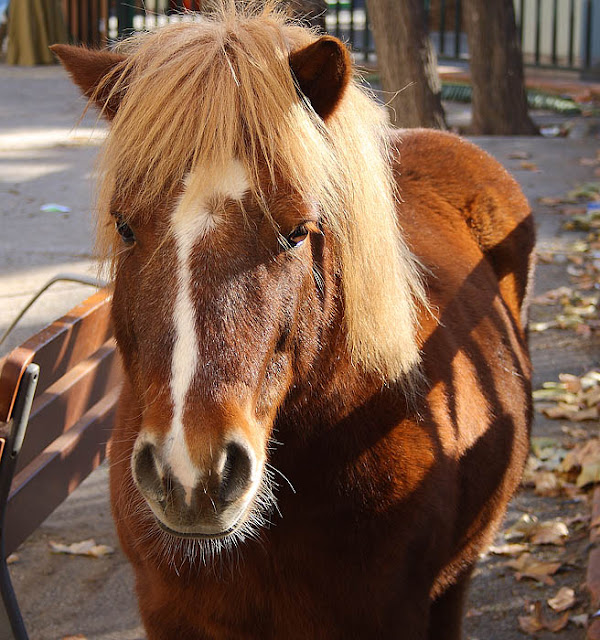
Flaxen Chestnut Pony (Equus caballus) portrait
(© 2012 LightColourShade. All rights reserved)

22 May 2012

Beach on a cloudy day

Even on a cold cloudy day there's always something on the beach that will catch your eye — like the reflection of a lonely water motorcyclist in the wet sand,

Water motorcyclist on the beach on a cloudy day
(© 2012 LightColourShade. All rights reserved)

4 March 2011

Winter Colours. Mimosa
(Lemon yellow)

Although mimosa blooms in winter, its colour gives you a feeling of spring. As soon as the tree comes into flower we know that spring is round the corner.
The name is derived from the Greek word μιμος (mimos), meaning "mimic.”

Silver Wattle (Acacia dealbata)
Silver Wattle (Acacia dealbata) close-up.
© LightColourShade
(CC by-nc-nd)

1 March 2011

Winter Sketches.
The Sea.

The sea is always beautiful, even when it's cloudy.

the sea in a cloudy winter day
The sea in a cloudy winter day

22 February 2011

Winter Sketches.
Birds.

It's still winter.
Colours are duller, light is dimmer, and shades are gloomier. Yet, there's a lot around to feast eyes on for those who look closely.

A group of cormorants usually winters at the local pond. Somehow they manage to find fish among plastic, empty bottles and all sorts of trash human pigs dump into it.

cormorants-perched-high-in-a-birch-tree
Cormorants-perched-high-in-a-birch-tree.
Related Posts Plugin for WordPress, Blogger...