 |
| Hibiscus (Rosa sinensis) hybrid red flower close-up. (© LightColourShade. All rights reserved) |
28 October 2014
Summer Colours: Scarlet Red. Hibiscus (Rosa Sinensis) Hybrid


19 September 2014

10 August 2014

21 July 2014
Summer Colours: Scarlet Red and Yellow/Pink. Flame tree (Brachychiton Acerifolius) and Mirabilis jalapa (The four o'clock flower)
In the dark, the red glow of these baroque style bell shaped flowers looks especially suggestive.
 |
| Flame tree (Brachychiton Acerifolius) close-up. (© LightColourShade. All rights reserved) |
18 July 2014
Supermoon
“The moon is friend for the lonesome to talk to.” ― Carl Sandburg.
These days Moon is at its closest point to Earth and full moon looks 14% bigger and 30% brighter than usual according to NASA. A supermoon is the coincidence of a full moon or a new moon with the closest approach the Moon makes to the Earth on its elliptical orbit, resulting in the largest apparent size of the lunar disk as seen from Earth. The technical name is the perigee-syzygy (from the Ancient Greek suzugos (σύζυγος) meaning "yoked together" is a straight-line configuration of three celestial bodies in a gravitational system) of the Earth-Moon-Sun system.
Well, for the scientists Moon is just a round piece of rock that revolves around the Earth, but according to Greek mythology, Selene, the goddess of Moon, is in love with mortal Endimion, eternally sleeping in a cave on Mount Latmus. Various myths tell different stories as to the cause of his eternal sleep, but the exact origin of this oneiric state and Selene’s role (if any) in it is unclear.
"Selene watched him from on high, and slid from heaven to earth; for passionate love drew down the immortal stainless Queen of Night." (Quintus Smyrnaeus' The Fall of Troy). And so Selene keeps pouring her sad light from high above, pining over her unrealizable love. The satellite’s “sorrowful face” created by dark volcanic maria that fill between the bright ancient crustal highlands and the prominent impact craters might, at least in part, have inspired the tales.
Every time I look at its wistful visage I wonder why would it turn precisely the doleful side to us (the far side is plain and inexpressive). Is it mourning our fate?
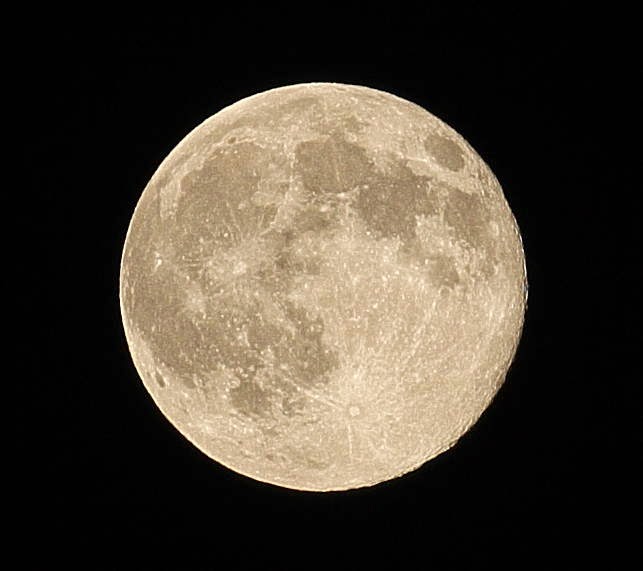 |
| Supermoon. (© LightColourShade. All rights reserved) |
17 July 2014
Summer Colours: Scarlet Red. Red Garden Geranium (Pelargonium hortorum) with Dewdrops
"The flower is the poetry of reproduction. It is an example of the eternal seductiveness of life" [Jean Giraudoux The Enchanted]
 |
| Red Garden Geranium (Pelargonium hortorum) with dewdrops. (© LightColourShade. All rights reserved) |
10 June 2014
Spring Treats. White Mulberry (Morus alba) fruits
Morus alba (family Moraceae), known as white mulberry, is a species native to northern China, and is widely cultivated and naturalized elsewhere.
It turns out that apart from being widely cultivated to feed the silkworms employed in the commercial production of silk, the plant has analgesic, emollient and sedative properties and has been used in traditional Chinese medicine for centuries as a remedy for surprisingly wide range of conditions: the fruit — to treat prematurely grey hair, constipation, diabetes, to "tonify" the blood; the bark — to treat cough, wheezing, edema, fever, headache, red dry and sore eyes, and to promote urination.
Extracts of the plant possess antibacterial and fungicidal properties. The root bark, for example, exhibits antibacterial activity against food poisoning micro-organisms, is antitussive, diuretic, expectorant and hypotensive. The roots are harvested in the winter and dried for later use.
The leaf extract has been studied against the Indian Vipera/Daboia russelii venom induced local and systemic effects. The leaves are antibacterial, astringent, diaphoretic (increasing perspiration), hypoglycaemic, odontalgic and ophthalmic, they are taken internally in the treatment of colds, influenza, eye infections and nosebleeds. The leaves are collected after the first frosts of autumn and can be used fresh but are generally dried.
The stems are anti-rheumatic, diuretic, hypotensive and pectoral. A tincture of the bark is used to relieve toothache. The branches are harvested in late spring or early summer and are dried for later use.
The fruit has a tonic effect on kidney energy and is used internally in the treatment of asthma, coughs, bronchitis, oedema, hypertension and diabetes.
Almost all parts of the plant are used in one way or another: recent research has shown improvements in elephantiasis when treated with leaf extract injections and in tetanus following oral doses of the sap mixed with sugar. Finally, it's not widely known that in some Central Asian countries a spirit (a kind of vodka or strong liquor) is distilled from mulberry fruits.
However, the fresh fruits are seldom available at the greengrocer's (probably due to their high perishability). So enjoy this wonder of Nature, even if just in pictures.
 |
| White Mulberry (Morus alba) fruit. (© LightColourShade. All rights reserved) |
Subscribe to:
Posts (Atom)
